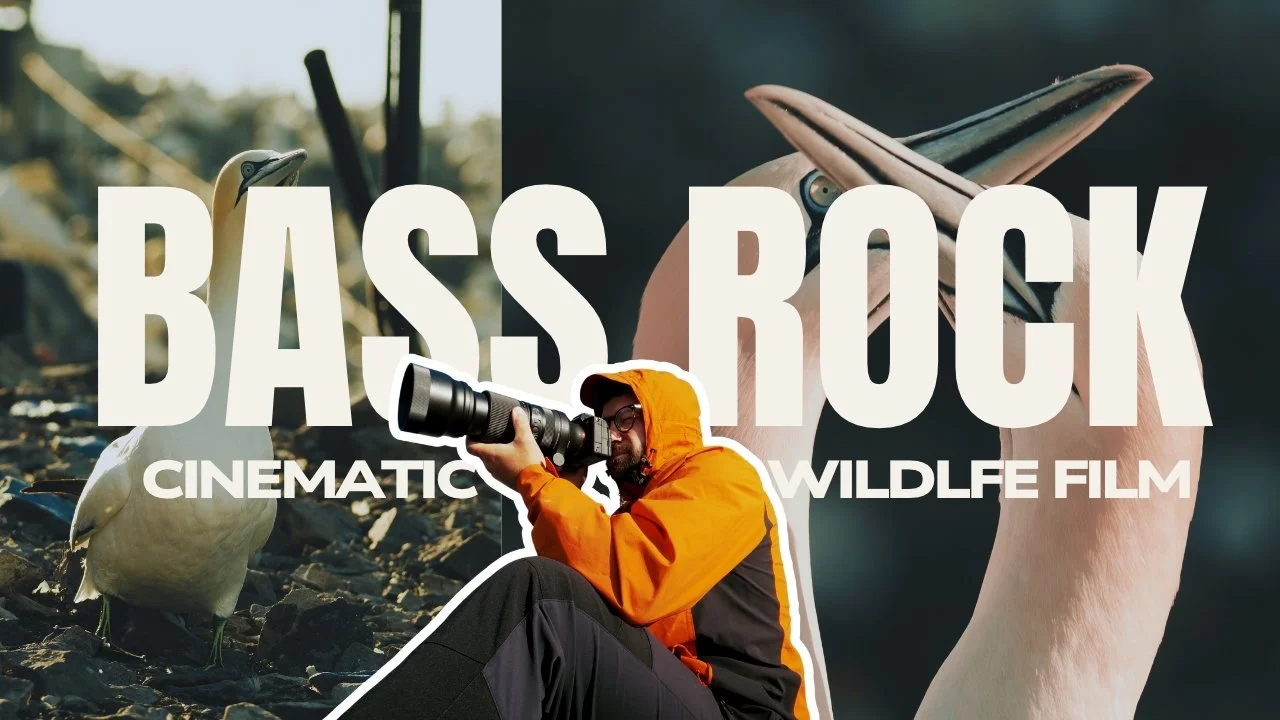
I take a journey to one of the world's most important Gannet Colonies and it's right here in Scotland. If you liked the video please do consider a LIKE & SUBSCRIBE 😊
Bass Rock: Inside Scotland’s Incredible Gannet Colony
Join me on a journey to one of Britain's most extraordinary wildlife locations, where thousands of Northern Gannets gather on a dramatic volcanic island off the coast of Scotland.
Some places you visit to take photographs. Others leave you wondering whether your camera can truly capture what you're experiencing.
Bass Rock, off the coast of East Lothian, Scotland, is firmly in the second category.
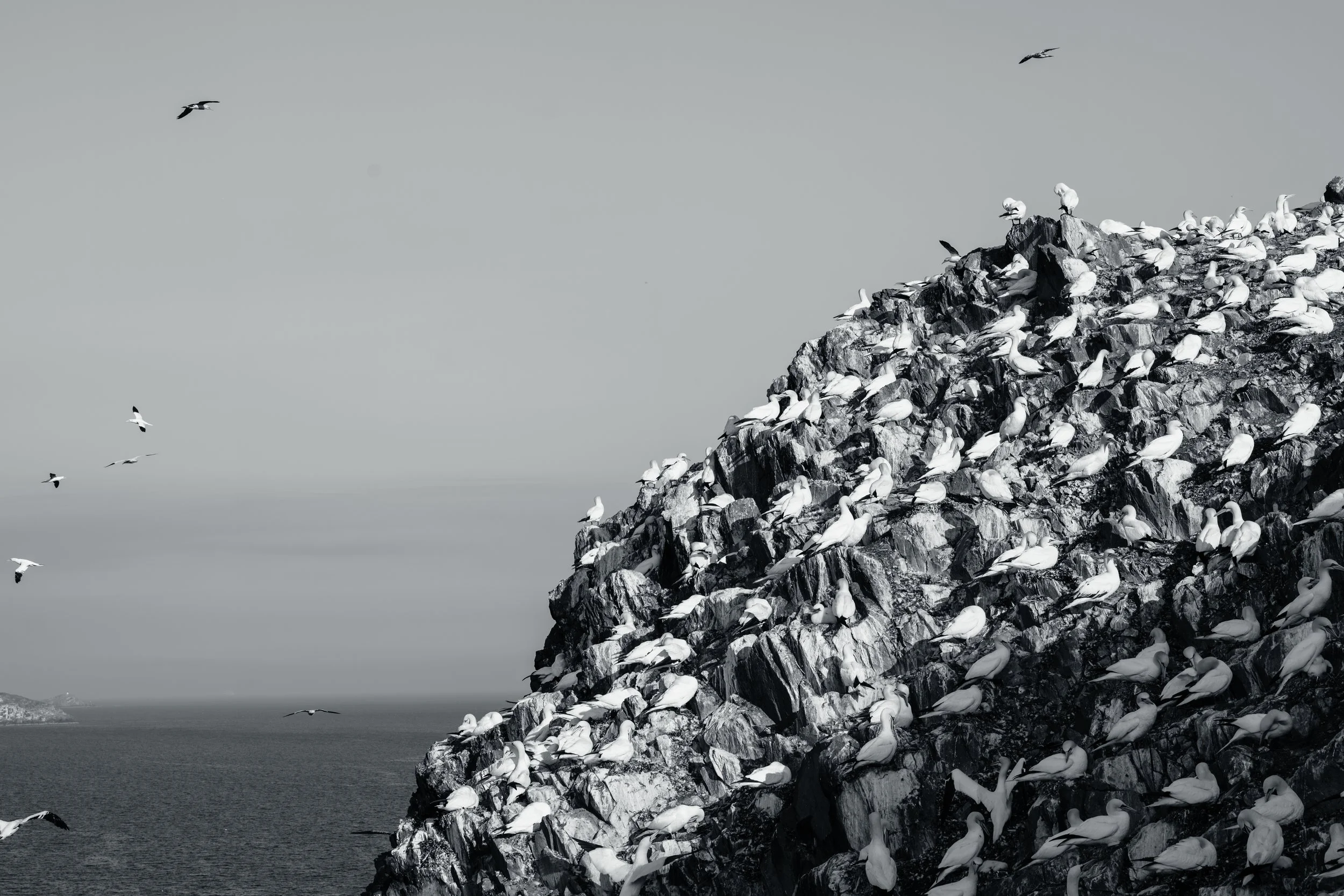
Rising dramatically from the Firth of Forth, this enormous volcanic rock is home to one of the world's most spectacular Northern Gannet colonies. From a distance, its white-covered cliffs almost resemble snow. Get closer, and the scale of the wildlife becomes astonishing.
For a wildlife photographer, it's an unforgettable sight.
The journey north
My trip began with a drive of more than five hours from North Wales to North Berwick. With an early boat trip planned, I decided to sleep in the car rather than book accommodation. It wasn't exactly luxury travel, but it did the job!
The plan was to experience Bass Rock from the water, photographing the gannets while taking in the history, scenery and behaviour of the colony.
Although I arrived with photographs in mind, I wanted more than a collection of technically good images. I wanted to observe the birds, understand their behaviour and capture the feeling of being surrounded by such an extraordinary natural spectacle.
Sometimes, the best moments are the ones you haven't planned.
Life among thousands of gannets
As the boat approaches Bass Rock, the sheer scale of the colony becomes increasingly difficult to comprehend.
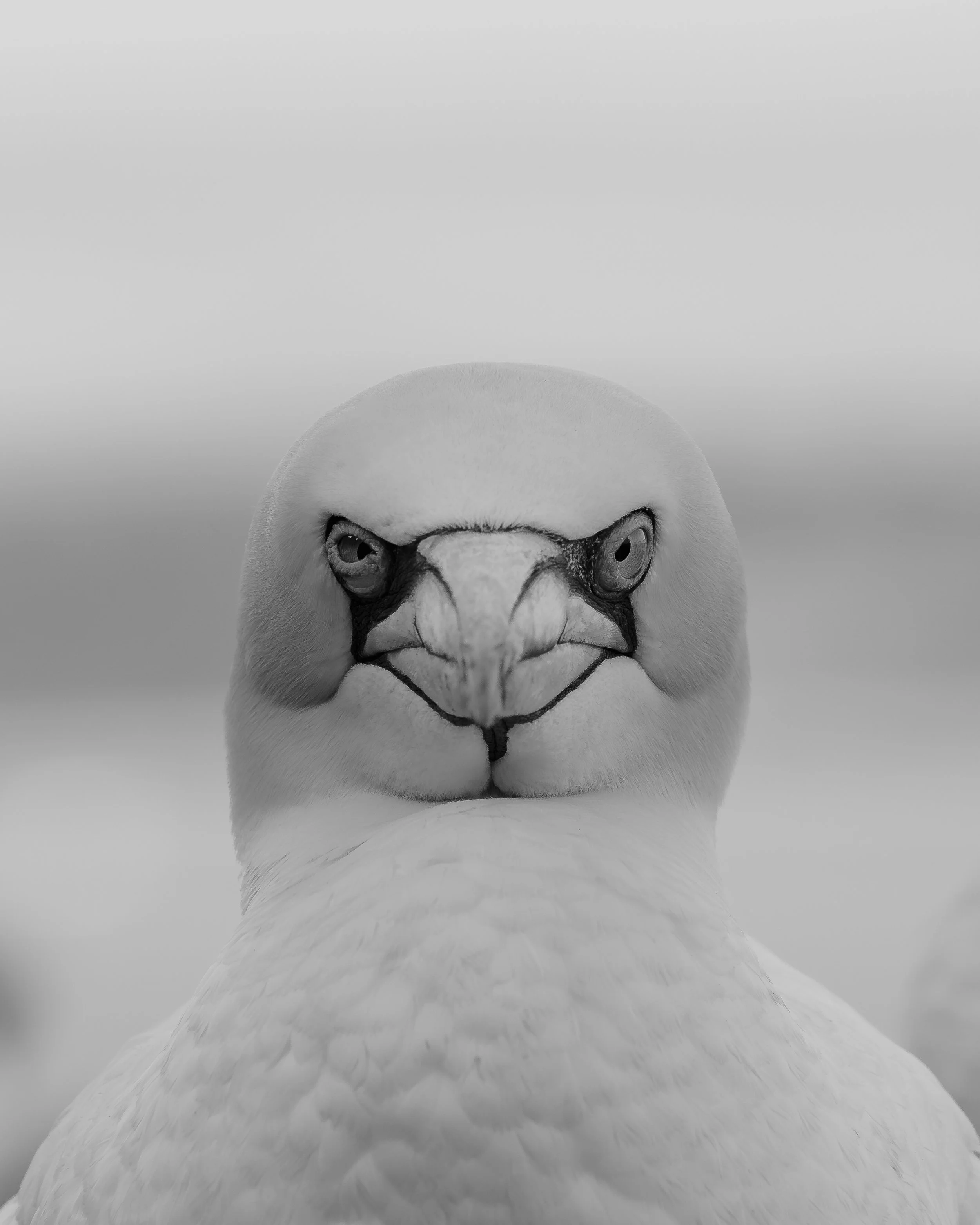
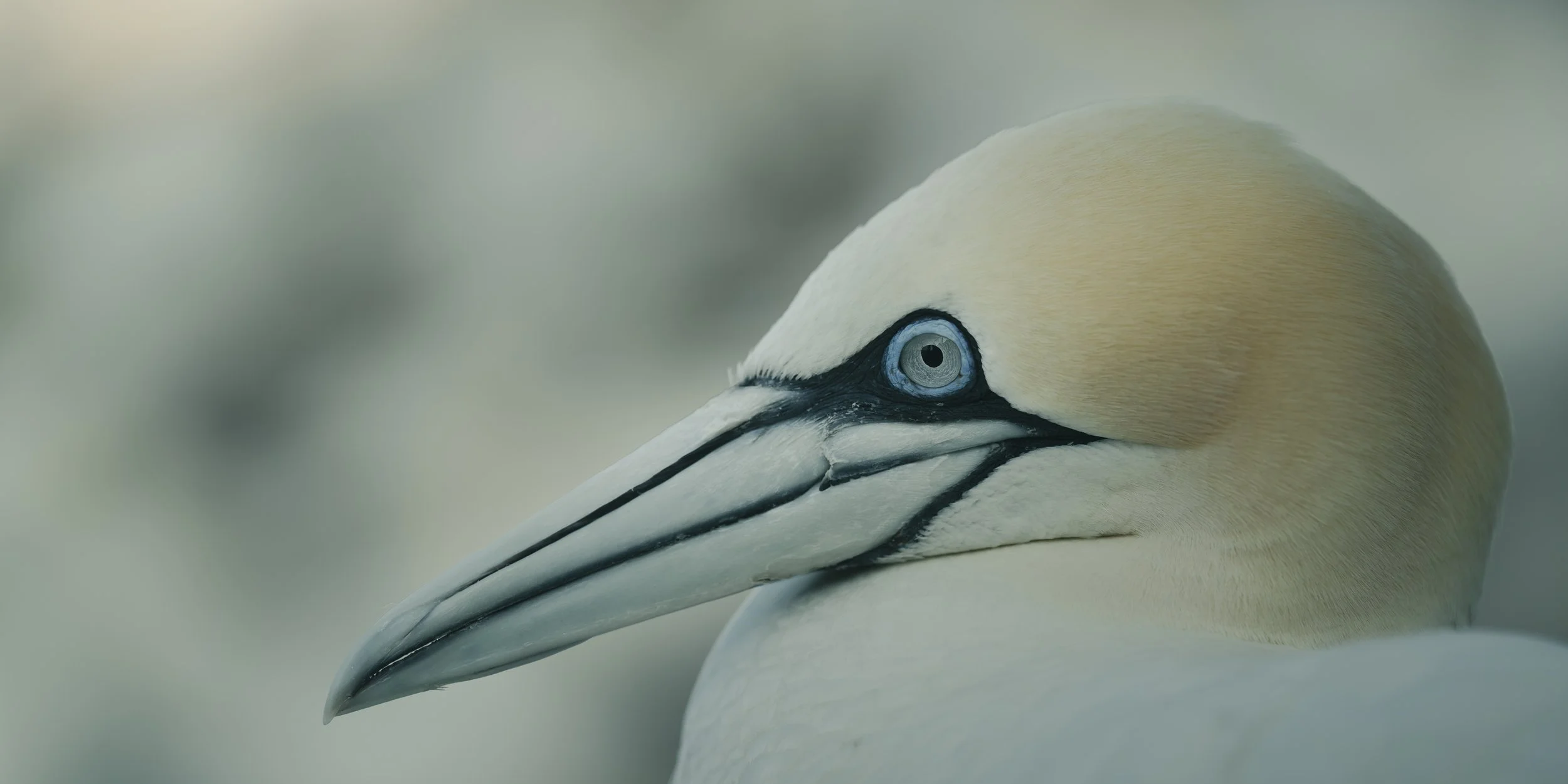
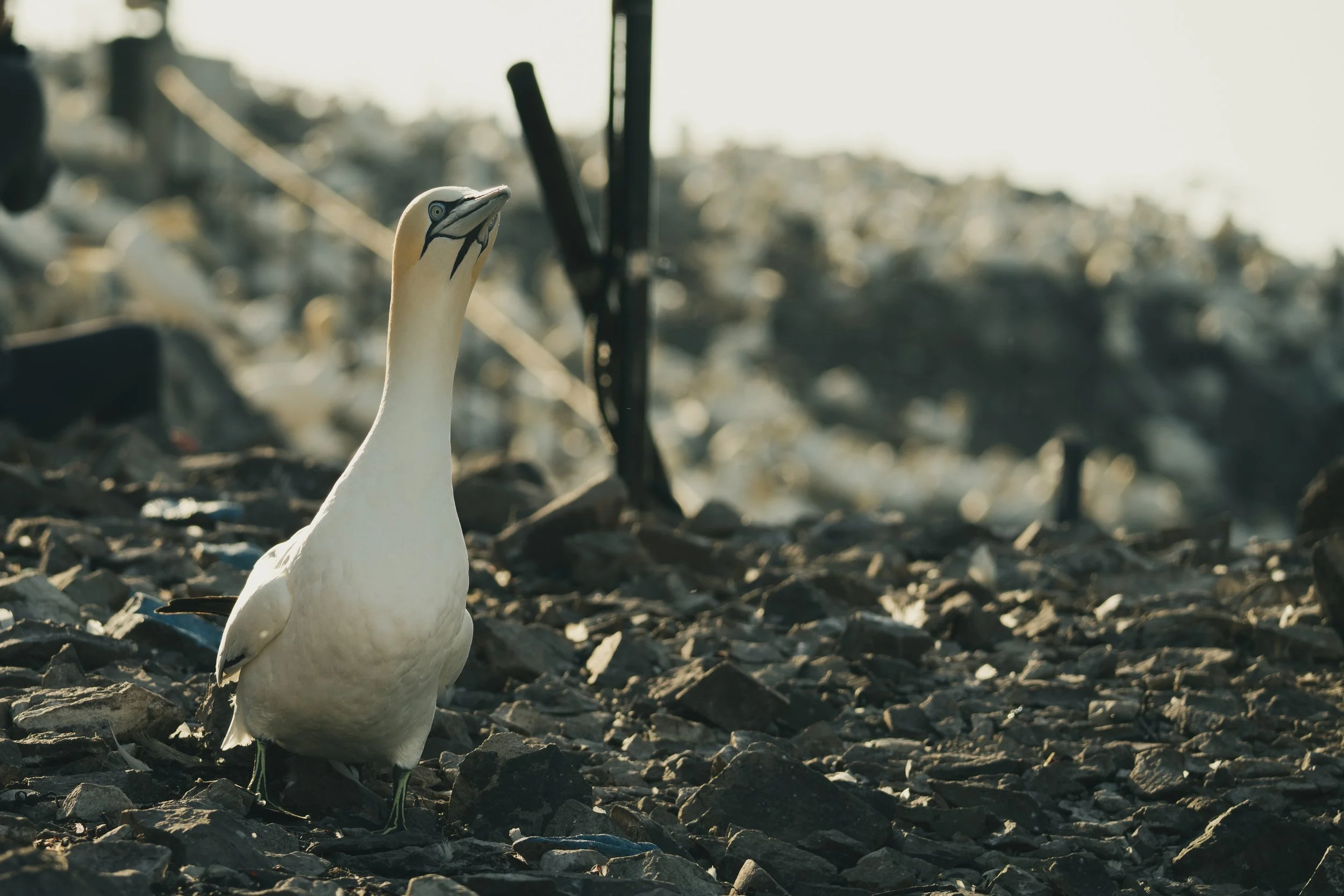
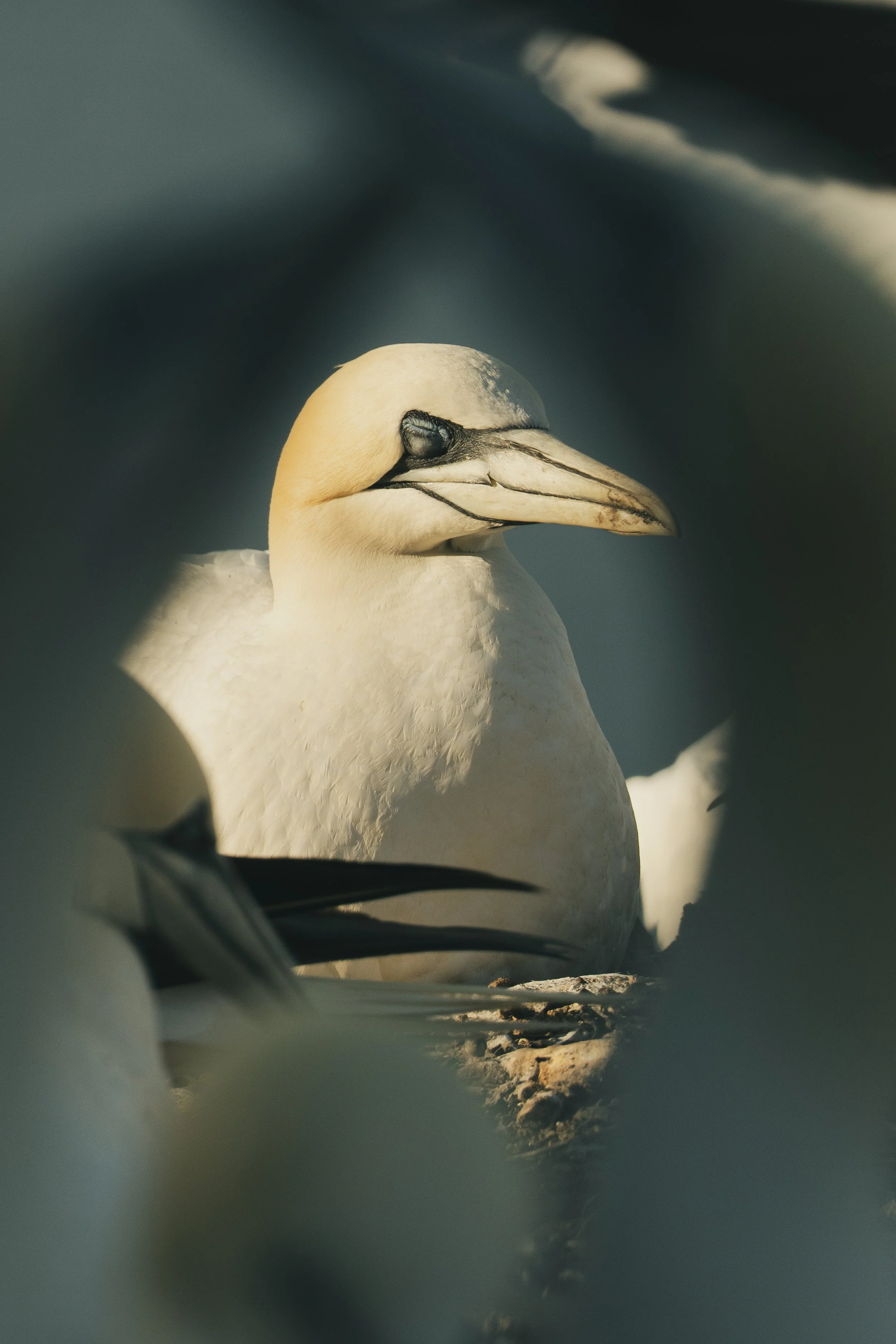
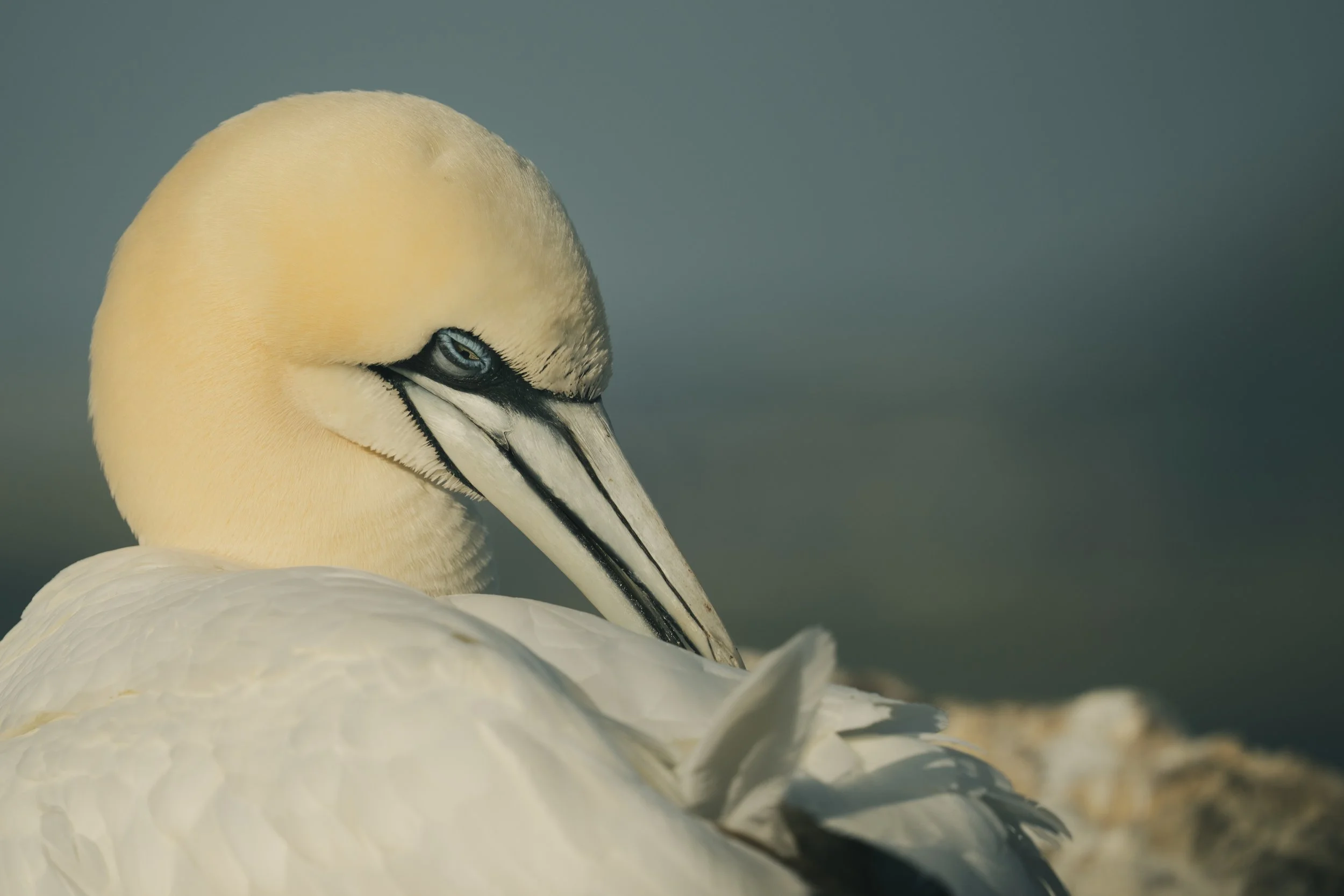
Northern Gannets are magnificent seabirds, with white plumage, black wingtips, pale blue eyes and long, pointed bills. Their streamlined bodies are perfectly adapted for life over the ocean, where they plunge into the water to catch fish.
But seeing a few gannets is nothing like witnessing an entire island dominated by them.
Birds circle overhead, nest on the crowded cliffs and return from fishing trips out at sea. Their calls fill the air, while the surrounding water becomes a constantly changing landscape of wings and movement.
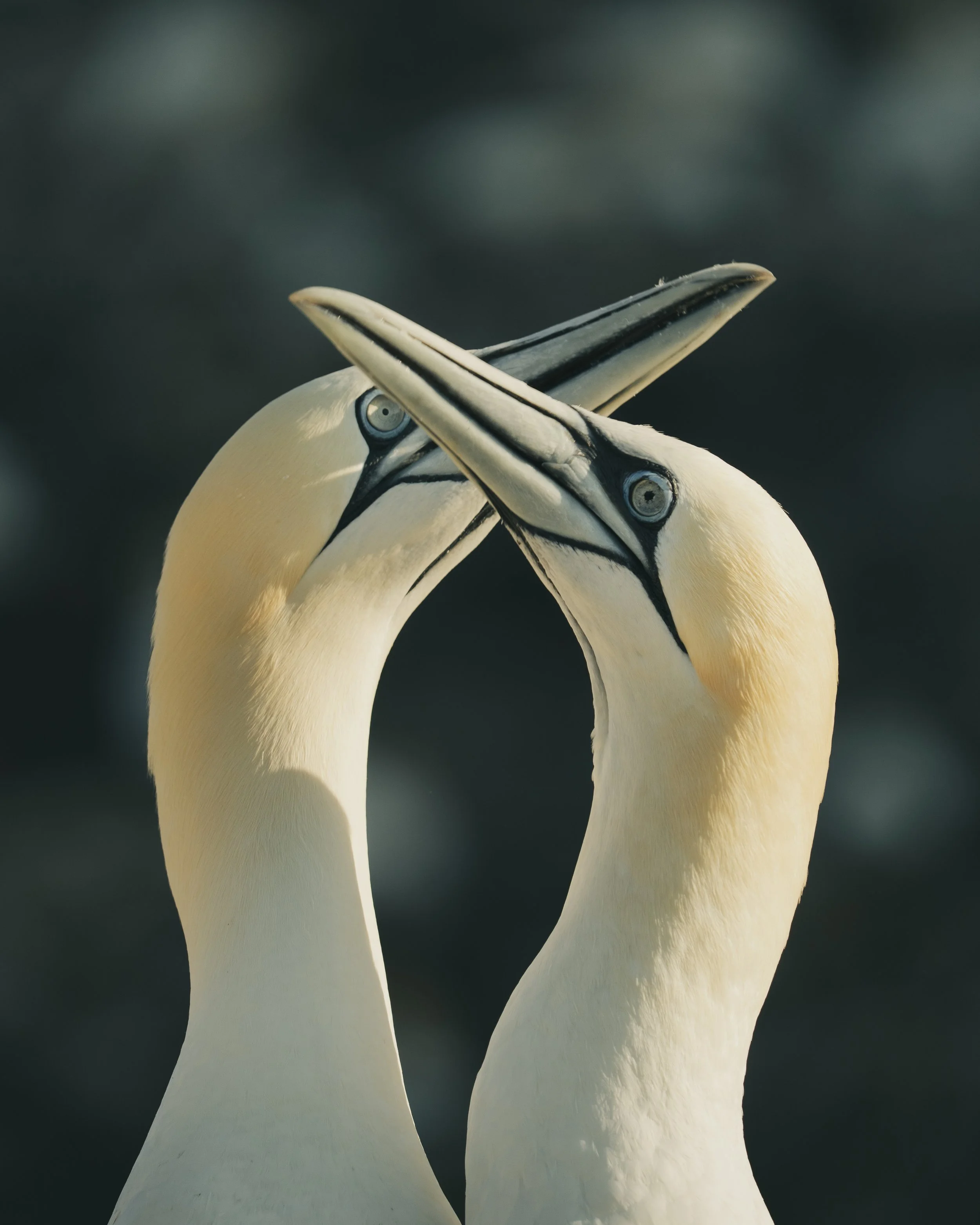
Amid all this activity, there are fascinating details to observe. Pairs interact through courtship displays known as billing, gently touching their bills and raising their heads as they strengthen their bonds. Others defend their nesting sites, tend to their young or bring material back to improve their nests.
In such a crowded colony, personal space is clearly in short supply!
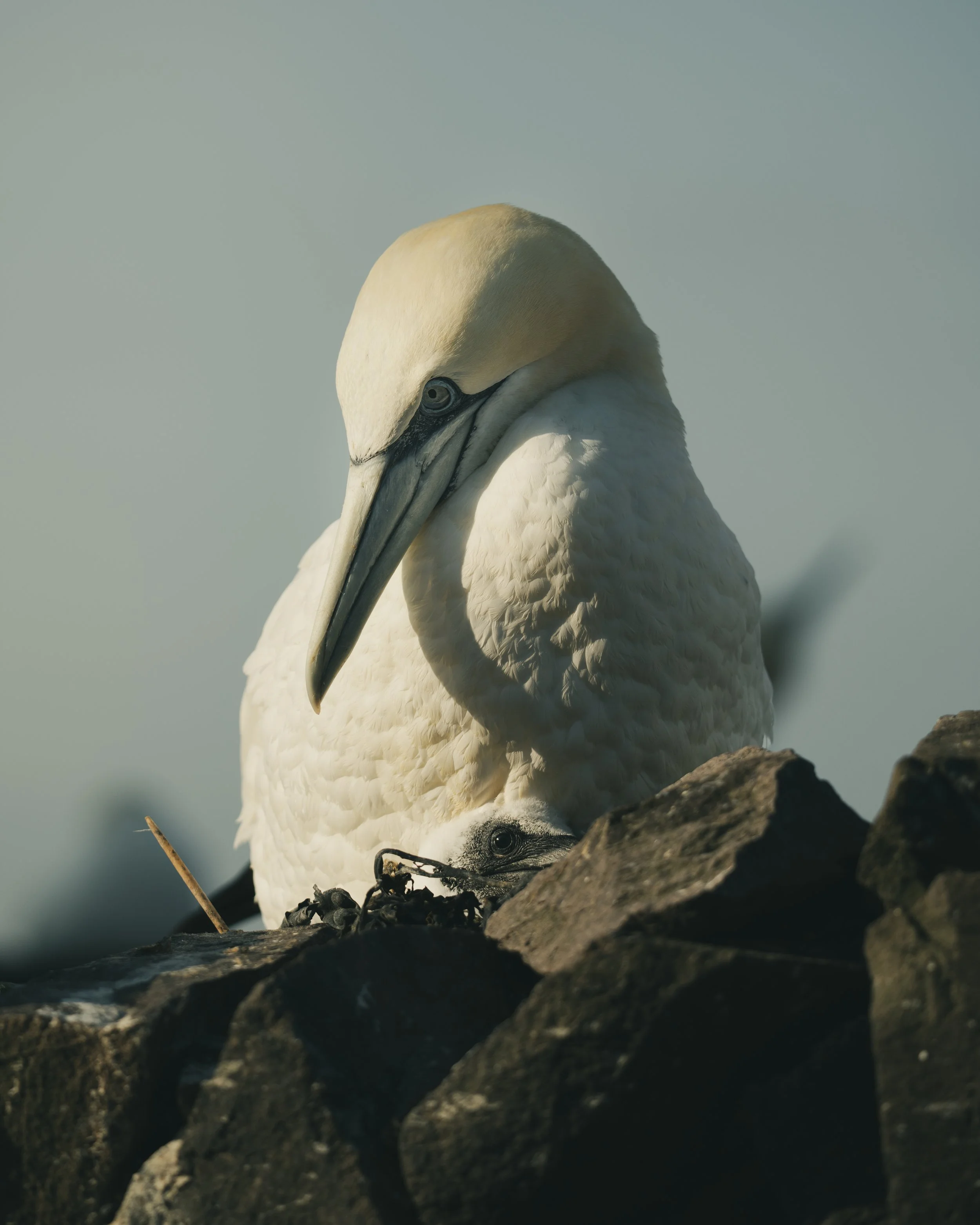
Watching the adults care for their fluffy young chicks also provides a lovely contrast to the sleek appearance of the mature birds. Beneath the spectacle, the priorities are simple: finding food, protecting the nest and raising the next generation.
Not every bird has a partner
One of my favourite observations involved a male gannet who appeared to be having rather less success than his neighbours.
He was making efforts to attract a mate and offering nesting material, but things didn't seem to be going particularly well.
It was an amusing moment and a reminder of why I love wildlife photography. You can plan a trip around particular shots, but some of the most memorable experiences are the unexpected ones.
Of course, we should be careful about assigning human emotions to wild animals. We can observe and interpret behaviour, but there is always room for uncertainty.
Still, watching this particular bird going about his business was a memorable moment. Even on Bass Rock, life doesn't always go according to plan!
More than a seabird colony
Bass Rock has a fascinating human history, too. Its isolated position and steep sides made it a natural stronghold, and the island has been associated with religious life, fortifications and imprisonment over the centuries.
It is also home to a lighthouse, first lit in 1902 and automated in 1988.
Looking at the island from the water, it's easy to understand why it has captured people's imaginations for generations. Yet today, its most remarkable story is arguably the wildlife that returns to nest there each breeding season.
The island is a reminder of how geology, history and nature combine to create places unlike anywhere else.
Photographing the spectacle
Photographing Bass Rock presents a wonderful challenge. There is so much happening that it's tempting to photograph everything.
Wide shots capture the sheer scale of the colony, while closer images reveal the character of individual birds. Behavioural photographs can tell an entirely different story, showing courtship, interactions between neighbours or the care adults give their chicks.
The challenge is deciding what each photograph should communicate.
You cannot direct a gannet into the perfect position or ask it to repeat a courtship display because you missed the first one. You have to observe, anticipate and be ready.
Sometimes the light works in your favour. Sometimes it doesn't. The birds always have the final say.
One of my favourite images from the trip was a photograph of a young gannet. What made it special wasn't necessarily technical complexity, but the memory and feeling attached to the moment.
That's one of the things I value most about photography. An image can become more than a record of an animal; it can transport you back to a place and an experience.
Why trips like this matter
Wildlife photography can easily become focused on results: sharpness, light, composition and the images we bring home.
Those things matter, but trips like Bass Rock remind me why I enjoy being out in the natural world in the first place.
There is something special about observing animals behaving naturally, learning about their lives and appreciating the environments they depend on.
It also brings responsibility. Wildlife welfare must always come first, and our presence should never come at the expense of the animals we have travelled to see.
The best encounters allow us to observe, learn and photograph without putting unnecessary pressure on wildlife.
The story behind the photographs
My trip to Bass Rock began with a long drive, an uncomfortable night sleeping in the car and an early start on the water.
I came away with photographs, memories and a renewed appreciation for one of Britain's most extraordinary wildlife spectacles.
I went hoping to photograph Northern Gannets, but the experience was about much more than the images. It was the noise of the colony, the movement of birds around the cliffs, the unexpected behaviours and the feeling of being surrounded by thousands of seabirds.
That's what I want my cinematic wildlife films to achieve: not simply to show an animal, but to take you somewhere, tell you a story and encourage you to look at the natural world a little differently.
Want to experience Bass Rock for yourself? Watch my latest wildlife film on YouTube and join me on the journey to this remarkable island.
Because sometimes, the best part of a photograph isn't the image itself. It's the story behind it.